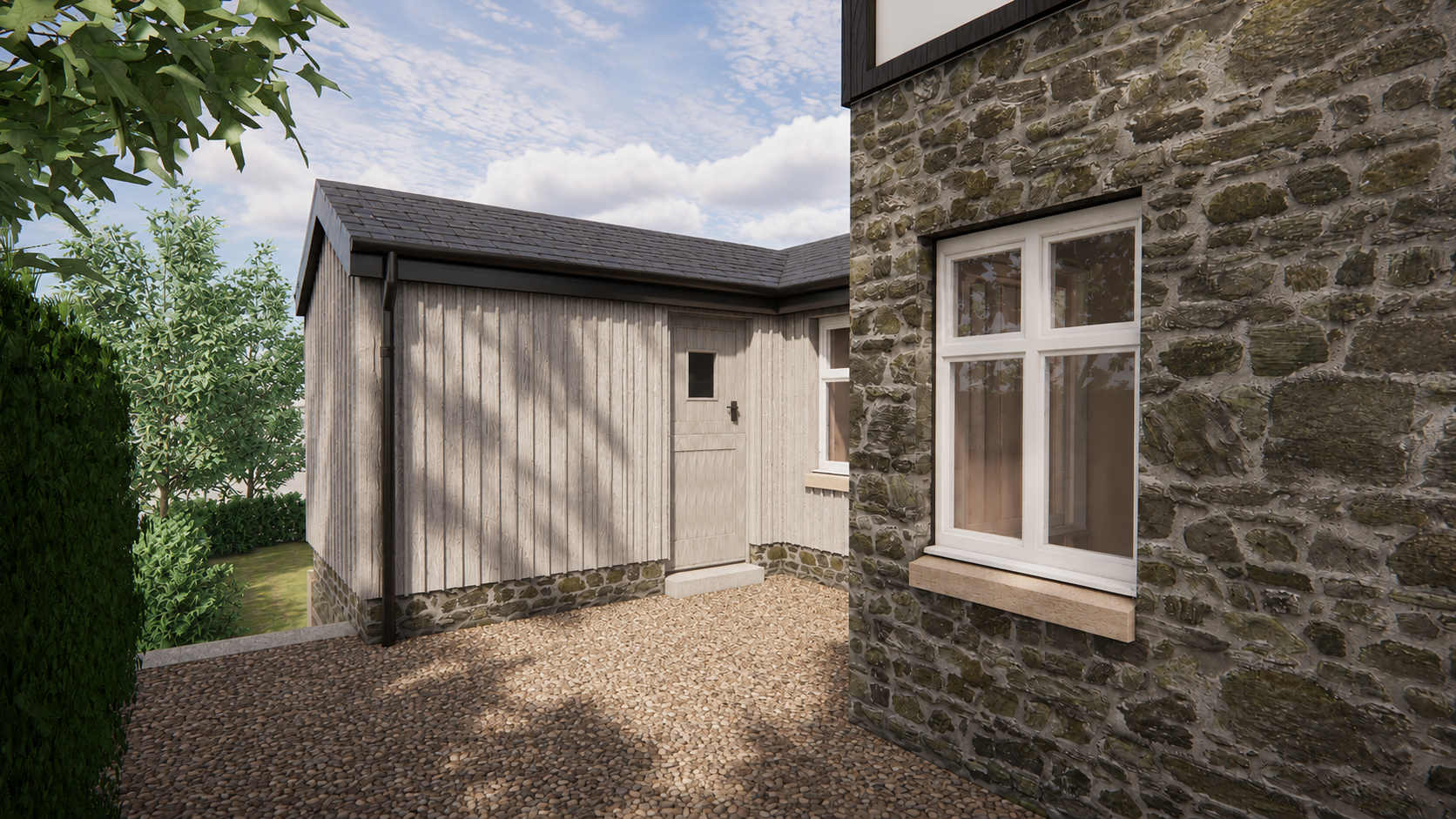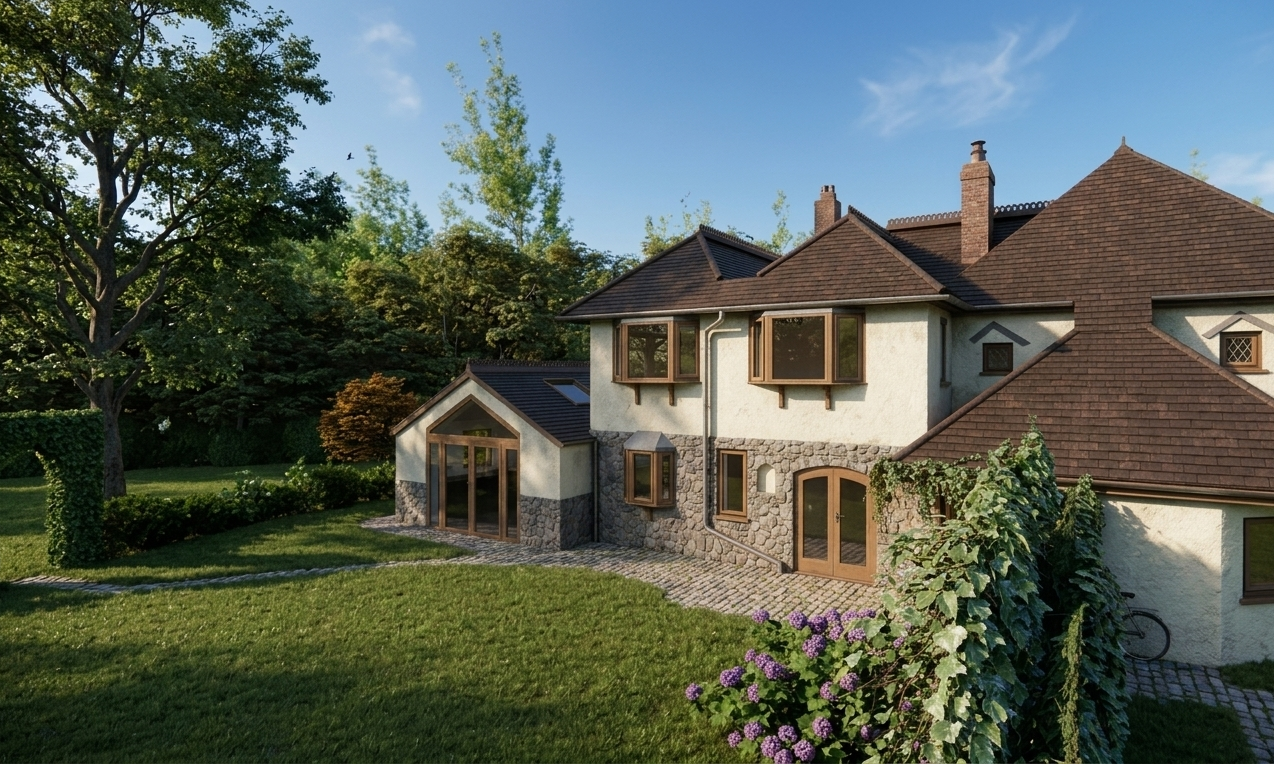
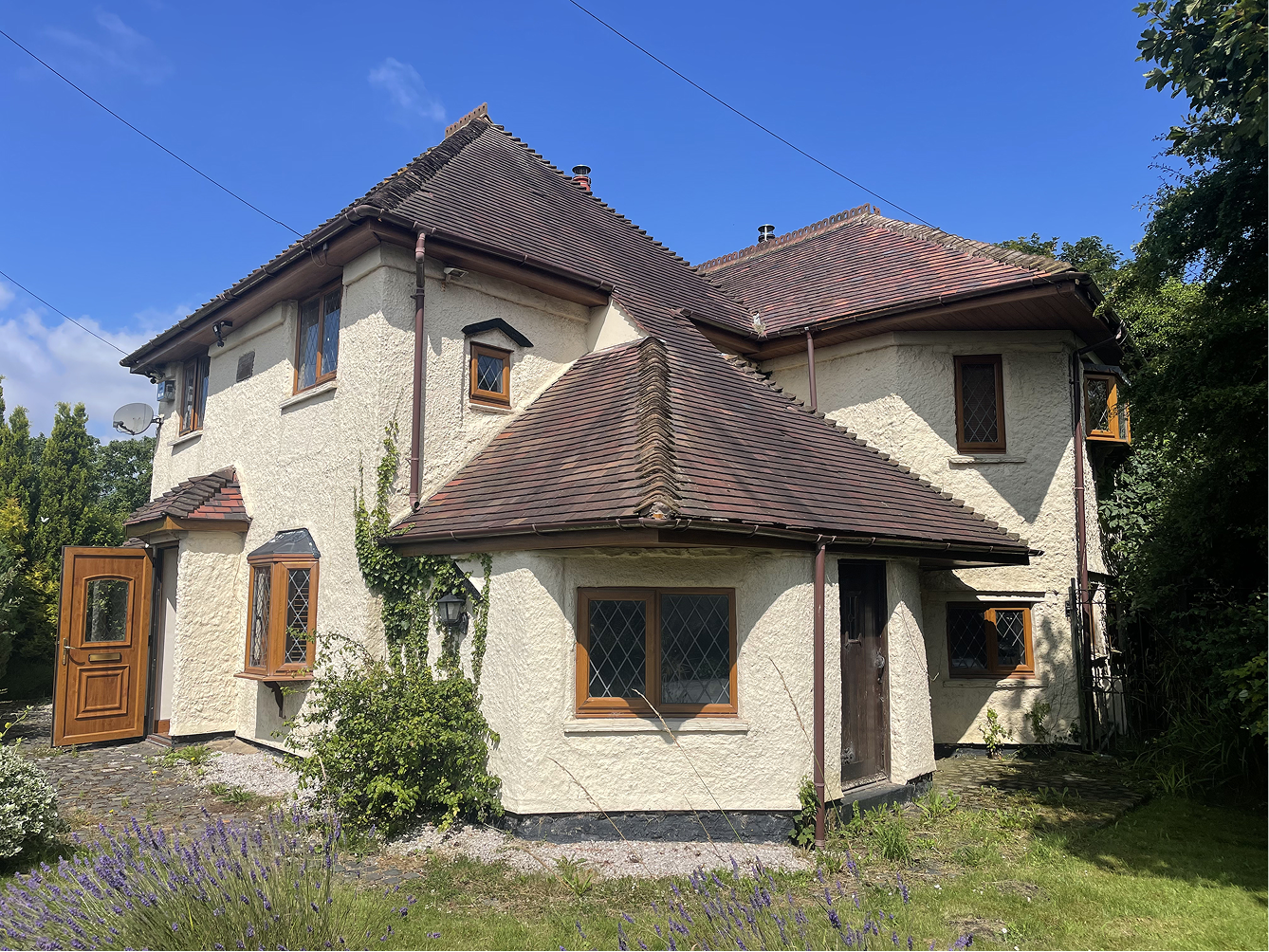
Here's how we're improving the energy efficiency of Acorn Cottage, a 200-year old home in Staffordshire, without compromising its character.
Older homes are full of character. They're also, more often than not, full of draughts.
When we took on Acorn Cottage, a period property sitting on a high water table with solid walls and no cavity insulation, the brief wasn't just to extend and renovate. It was to make the home genuinely more comfortable and efficient to live in, while also being careful not to damage the fabric of a building that has stood for well over a century.
What followed was a layered, considered approach to energy performance – one that puts the building first, and technology second.
Here's what we're doing, and why.
Start with the Fabric, Not the Gadgets
It's tempting to jump straight into renewable energy. Solar panels, heat pumps, the full package. But in an older building, that approach can cause more problems than it solves.
If the building itself is leaking heat through its walls, floor, roof, and windows, adding a heat pump simply means you're generating warmth more efficiently and then losing it just as quickly.
The principle we like to follow is fabric first: getting the building performing well before you layer in technology. At Acorn Cottage, that means addressing insulation, moisture, airtightness, windows, and heating in the right sequence.
External Wall Insulation
Warmth without sacrificing space.
Acorn Cottage has solid walls. So, unlike modern cavity wall construction, there's no gap to inject insulation into. The options are to insulate internally, which reduces room sizes, or insulate externally instead, which adds to the outside of the building.
We've chosen external wall insulation, adding approximately 100mm to the outside of the building, so the internal rooms stay exactly as they are. The result is a significant improvement in how well the walls hold heat, without the homeowners ever noticing the difference indoors.
One important consideration on any heritage property: the render finish must be chosen carefully.
On older buildings, the wrong finish can look out of place and, in some cases, requires planning approval. We've worked through this with both the design and the planning process to ensure the result suits the character of the property.
It's also worth noting that external wall insulation is currently rated at 0% VAT in the UK as an energy-saving measure, something worth factoring into the budget conversation early.
Fix the Damp First, Always
Before any insulation work began, we needed to address moisture.
Acorn Cottage had no modern damp-proof course and sits in an area with a high water table, a combination that had been causing rising damp.
This is a step many owners of older properties overlook, and it matters enormously. If you insulate a damp building, you risk trapping moisture and accelerating the very decay you're trying to prevent. Older buildings manage moisture differently from modern ones – they're designed to breathe – and that has to be respected.
At Acorn Cottage, we've installed an internal damp-proof membrane and reviewed the drainage and surface water strategy around the building to reduce ground moisture pressure on the walls. Sorting this before anything else wasn't optional; it was fundamental.
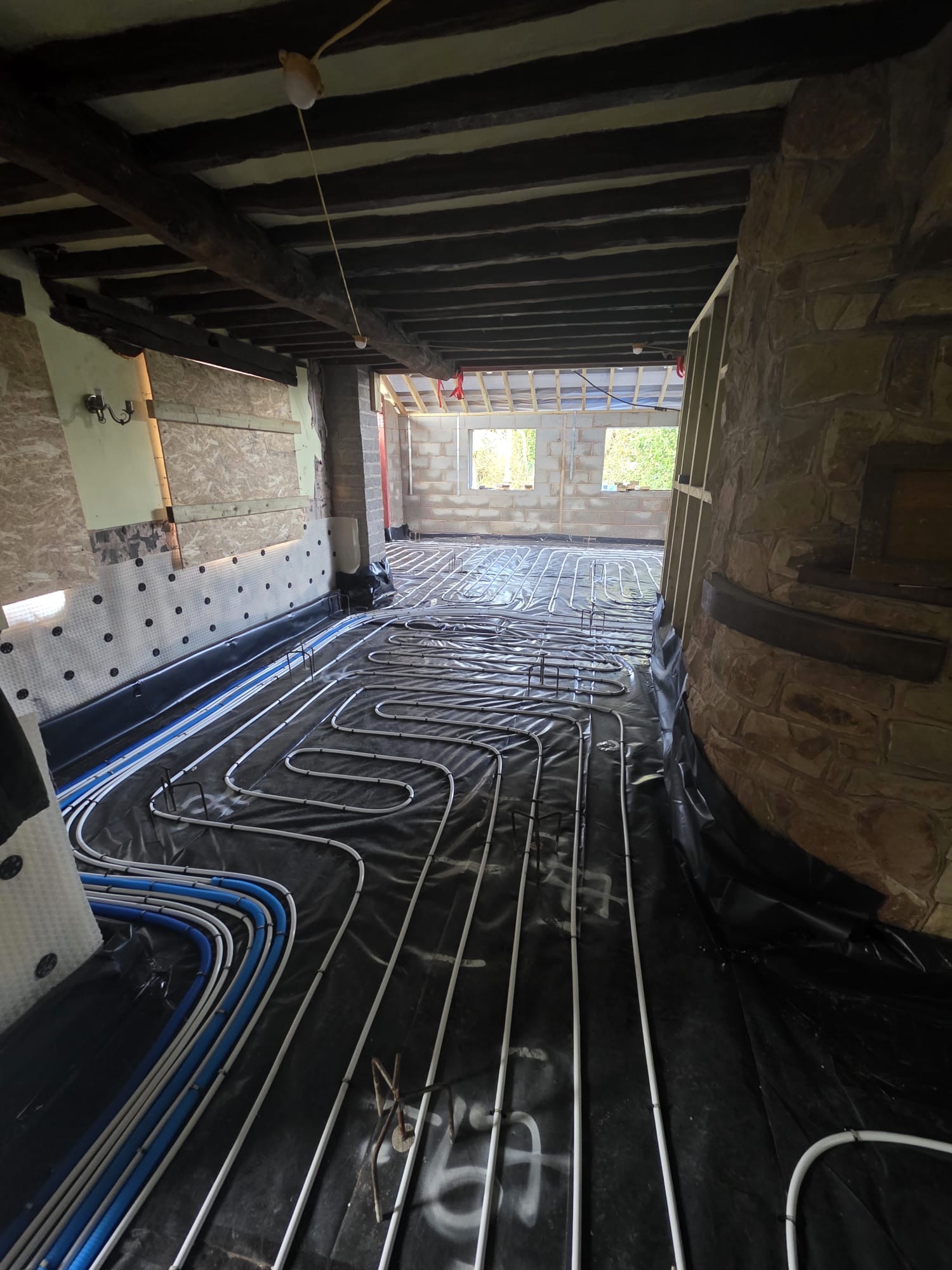
The Right Underfloor Heating
We've removed the ground-floor radiators and replaced them with a wet underfloor heating system.
Underfloor heating works by warming a large surface area at a lower temperature, rather than heating a small radiator to a high one. In a well-insulated building, this is significantly more efficient. It also produces a gentler, more consistent background warmth – less fluctuation, fewer cold spots, and a more comfortable home overall.
Crucially, the system has been specified to suit low flow temperatures, which means it's ready for a future heat pump transition without any major reconfiguration. The existing oil boiler is relatively new, so for now it stays, but when the time is right, the groundwork is already done.
Windows and Doors
In older homes, windows and doors are frequently where the most heat is lost.
Acorn Cottage is having new windows and doors throughout, with careful attention paid to the sealing at every junction.
A common misconception is that triple glazing is always the answer. In reality, the biggest performance jump comes from replacing old, failing double glazing with modern double glazing. The gap between modern double and triple glazing is narrower than most people expect, and the quality of installation often matters more than the glass specification itself. We've focused on getting both right.
Roof Insulation, Floor Insulation & Airtightness
Heat rises, and a poorly insulated roof is one of the most significant sources of heat loss in an older home.
Upgrading the insulation at roof level makes a meaningful difference to how the whole building performs, and we've taken care to maintain correct ventilation in the roof to prevent condensation from forming within the structure.
At ground level, an insulated floor build-up – particularly when paired with underfloor heating – reduces the cold floor effect significantly. Warm floors change how a room feels even before the air temperature rises.
Airtightness improvements such as; sealing around openings and improving junction detailing, work alongside all of this. Reducing uncontrolled draughts is one of the most cost-effective things you can do in an older property. The important balance is to pair this with adequate ventilation, so moisture from cooking and bathing is still extracted and indoor air quality is maintained.
Future-Proofing Without Future-Guessing
We're not installing solar panels at Acorn Cottage at this stage. The roof orientation and potential planning constraints mean it's not the right time. But we've made provision for it – space in the utility room for battery storage, electrical routing considered for future integration and a consumer unit with capacity for expansion.
An EV charger is already installed. The underfloor heating is heat-pump ready. The electrical infrastructure is designed to accommodate what comes next, whatever that looks like.
The goal isn't to future-guess every technology shift. It's to avoid closing doors unnecessarily.
Why This Approach Matters in Heritage Buildings
Older properties require a different mindset from new builds. The temptation to treat them like a blank canvas – ripping out and starting again – ignores both the embodied carbon in the existing structure and the character that makes them worth living in.
Retrofitting and upgrading what's already there is, in most cases, the more sustainable choice. It preserves the building, reduces material waste, and (when done well) produces a home that performs far better than a new build without losing what makes it special.
At Acorn Cottage, every decision has been made with the building's age and character in mind.
If you're considering energy performance upgrades for an older or heritage property in Staffordshire, Cheshire, Shropshire or the surrounding areas, we'd be happy to talk through what's possible.
Get in touch to start the conversation.