For most of the last century, UK home design has been built around one problem: keeping the heat in. Cold winters, damp climates, and a very British obsession with insulation have shaped how our houses are built, extended, and glazed. Staying warm has always been the priority, but is that starting to change?
This summer, the UK recorded its hottest June day on record at 36.1°C, with the first ever national emergency called for extreme heat. It also followed a year in which the UK broke its May temperature record twice within two days.
Heatwaves that were once rare and brief exceptions are becoming a regular part of the British summer, and our homes, largely designed for the opposite problem, are struggling to keep up. It's no longer just a statistic, it's homeowners across the country, in real time, describing their own homes as unbearable.
What Homeowners Are Actually Saying
A recent Daily Mirror article spoke to homeowners living in glazed extensions and new builds, and the language used was telling.
One Berkshire homeowner described her glazed extension as "like living in a hot box, or a sauna," saying the room becomes unusable in summer, with the family sometimes resorting to sunglasses indoors. Another new-build resident said her home gets hotter inside than the temperature outside. A third, after investing in an extension with a 4-metre glass sliding door, said she now regrets it enough that she's considering having it removed altogether.
The Climate Change Committee has stated that around 92% of British homes are prone to overheating during extremely high temperatures, and has called the UK "built for a climate that no longer exists."
.png)
Why Modern Homes Overheat
It's very tempting to blame specific modern features, as the Daily Mirror article seemed to lean towards. Bifold doors, large glazed extensions, and floor-to-ceiling windows are often singled out in press coverage as the culprits behind homes overheating.
But glazing itself isn't really the problem. The issue is when a design doesn't account for how much solar heat that glazing lets in, and how easily (or not) that heat can escape again.
A large area of glass facing south or west can act almost like a greenhouse. Sunlight passes through, warms the surfaces inside, and converts into heat that gets trapped in the room. On a cold winter's day, that's exactly what you want. In a heatwave, it can make a bright, glazed extension close to unusable.
There's also a common misconception, particularly when talking about new build homes in summer, that better insulation makes overheating worse. Research on this is fairly clear: energy efficiency measures don't inherently increase the risk of homes overheating. Insulation works to stop heat flowing in either direction, and when combined with good shading and ventilation, it can actually help keep homes cooler in summer as well as warmer in winter. The risk factor isn't the insulation. Again, it's a design that doesn't plan for solar gain and airflow together.
Why This Hasn't Always Been a Priority for Architects or Home Builders
Historically, designing UK homes for excessive temperatures hasn't been a huge focus for architects and designers, understandably so.
Heatwaves severe enough to genuinely disrupt daily life have been relatively uncommon here in the UK. Building regulations reflected that: for decades, the focus was almost entirely on keeping homes warm and reducing winter heating demand, for good reason, since cold homes have caused far more deaths than hot ones over the past 25 years.
But the climate is shifting, and regulation, and the profession, are starting to shift with it. Since 2022, new-build homes have been required to be assessed at design stage for overheating risk, with architects required to make changes if that risk is judged too high.
RIBA has echoed this shift too, describing external shading as one of the most effective, yet most underused, tools in UK home design, precisely because our building culture has spent decades focused on staying warm rather than staying cool.
As the profession increasingly acknowledges, heatwave preparation needs to become part of everyday design thinking, not an afterthought bolted on once a problem's already been felt.
What Recurring Heatwaves Mean for Extensions and Renovations
If you're planning an extension, particularly one with significant glazing, this change in weather is worth factoring into the design from day one, not retrofitted after the first heatwave makes a room unbearable to be in.
A few things worth thinking about:
Orientation and glazing specification. A north-facing window and a west-facing glazed door need very different treatment. Where a large glazed area faces direct sun for much of the day, it's worth discussing solar control glass or a lower G-value specification with your designer. Both reduce how much solar heat passes through the glass while still letting in natural light.
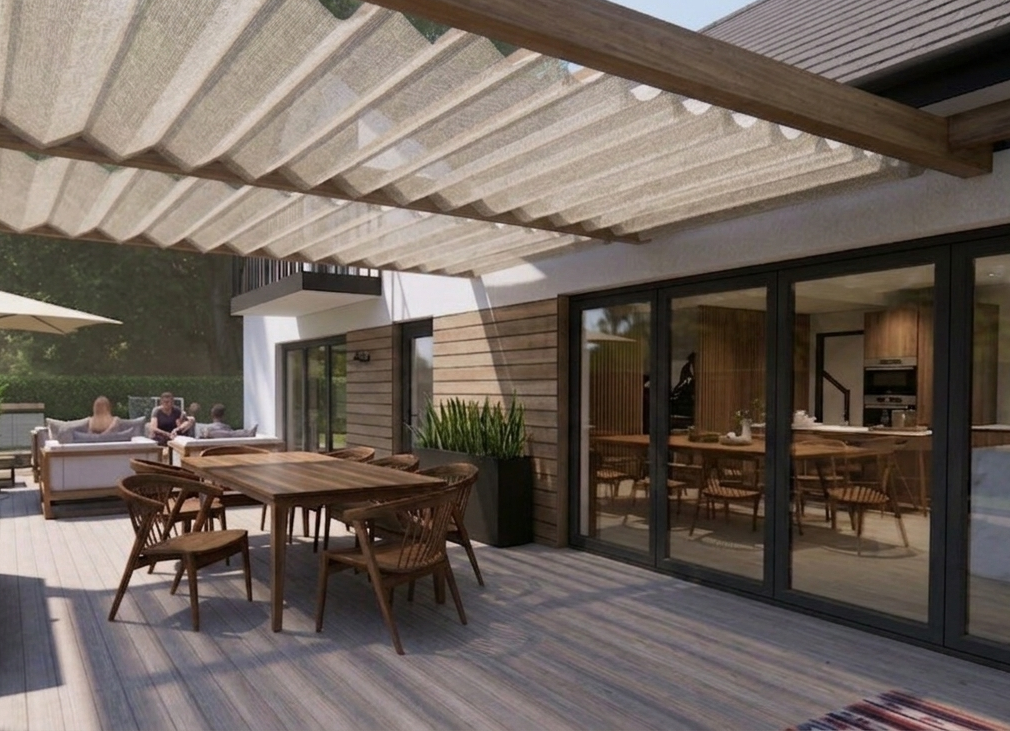
Shading, ideally external. Internal blinds and curtains help, but by the time heat has already passed through the glass, they're only managing a problem that's already inside the room. External shading, whether that's fixed overhangs, planting, or automated blinds fitted to the outside of large glazed doors, stops that heat before it ever gets in.
Research from Loughborough University has found external shading can reduce indoor temperatures by more than 6°C compared to unshaded equivalents.
Ventilation that works with the space. @VELUX sky lights and high-level windows matter. Hot air rises, so an opening roof-light above a glazed extension gives that heat somewhere to escape, rather than building up under the roofline all afternoon. It's a simple bit of physics that makes a real difference to how a room feels by early evening.
Thermal mass and material choice. Materials that absorb and slowly release heat, like stone, brick, or dense screed floors, can help buffer temperature swings, keeping a space cooler during the hottest part of the day and releasing warmth gradually overnight when it's most useful.
Extensions over conservatories. This is part of why we tend to steer clients away from conservatories in the first place. A well-built extension, properly insulated and glazed with overheating in mind, stays far more comfortable year-round than a conservatory ever will, without the extreme summer heat or winter cold conservatories are known for.
An Example: Project Winchester
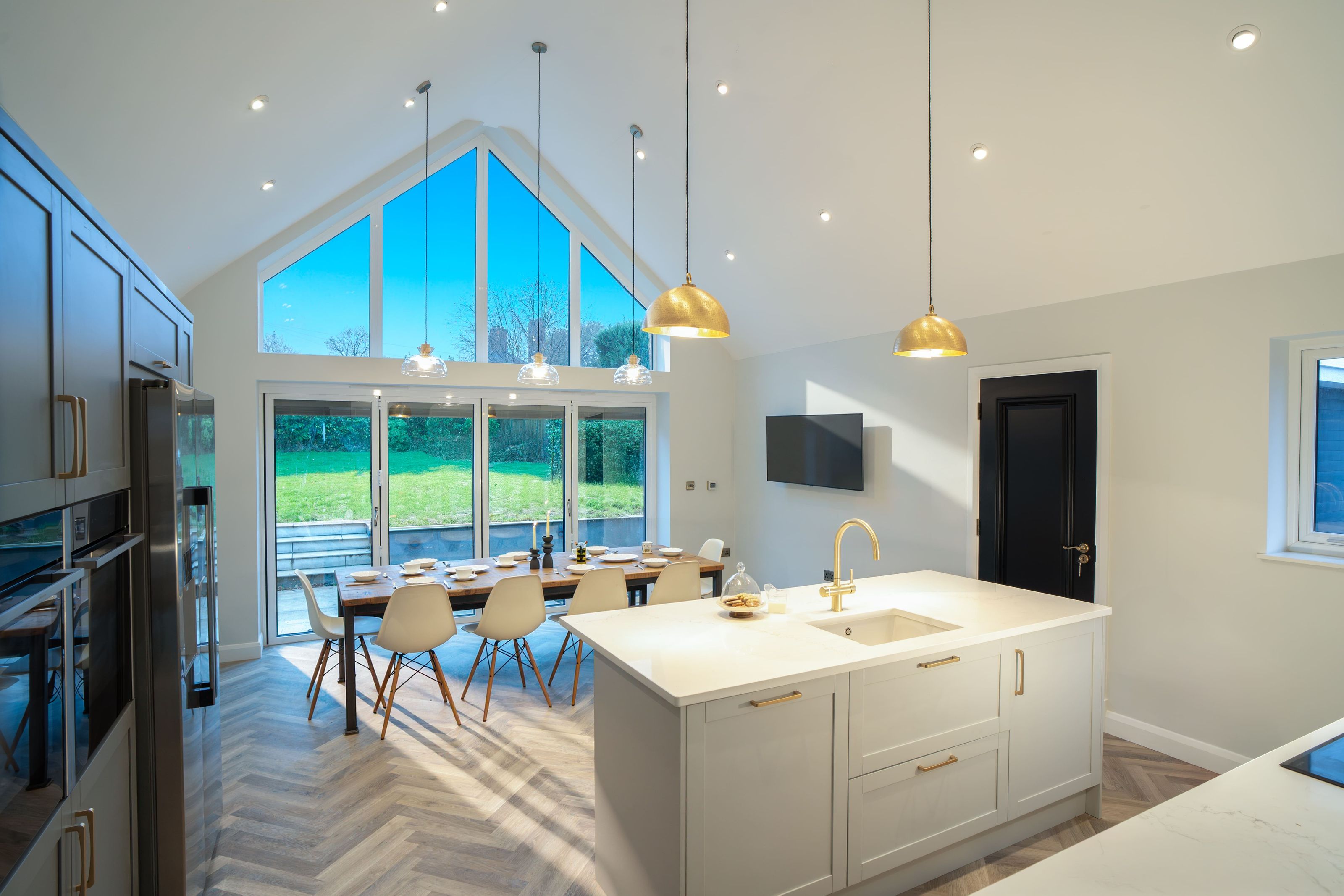
On one of our recent extension projects, we knew from the outset that a large expanse of bifold doors would sit in direct sunlight for much of the day. Rather than treating that as something to manage after the fact, we built in integrated electric blinds at design stage: external, integrated, and controlled without anyone needing to think about it.

It's a small addition in the context of a full project budget, but it's the difference between a bright, glazed space that's genuinely usable all summer, and one that becomes the room nobody sits in by July, the kind of space so many of the homeowners in that Mirror article described.
It's also worth mentioning that we installed a ground source heat pump on this project, which brings an added benefit beyond winter heating. Because the ground stays at a stable, cooler temperature than the air in summer, the same system can be used to cool the home too, either passively, by circulating that cooler ground temperature through the house, or more actively by reversing the heat pump cycle.
Our Final Thoughts on Designing UK Homes With Future Heatwaves in Mind
None of what we've written here means avoiding glass, light, or open-plan living. Those are still some of the best things a well-designed extension can bring to a home. It simply means thinking about summer with the same seriousness we've always given winter.
As UK summers continue to get hotter, the homes that stay comfortable won't be the ones with the least glazing. They'll be the ones where someone thought about the sun's path, the airflow, and the shading, before a single pane went in.
Want to speak to us about an extension or renovation project?
|
Sources:
Daily Mirror: https://www.mirror.co.uk/news/uk-news/heatwave-new-builds-bifolds-hacks-37342873